When a roof to a listed building starts to leak the need to immediately repair is understandably urgent. Unfortunately, that urgency can lead owners to feel pressured into making quick and decisive decisions about their roof repair. Following a recent experience with one of my clients, I wanted to share key questions every listed building owner should consider before commissioning roof repairs to a listed building.
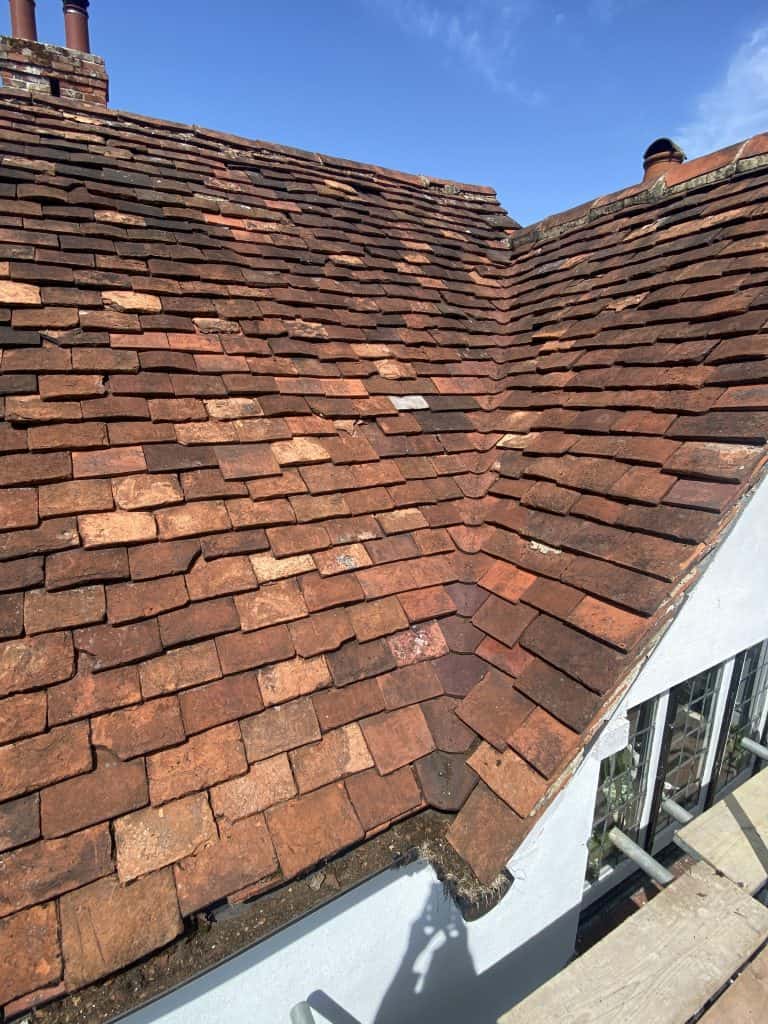
My client’s scope of work to their listed building was for a relatively modest roof repair for a valley gutter. Once the scaffolding was up the roofing contractor decided to explore other areas of the roof, videoing what they found when they prodded and lifted with sensationalist voice-overs. One video even claimed, “the whole roof is moving!” The large roof ultimately had no area left untouched and the client was being led down a route of extensive repairs – none of which had listed building consent.
My client’s situation is now being investigated by Trading Standards, and the National Federation of Roofing Contractors (NFRC) is also pursuing the roofing contractor after its logo was used without authorisation – the use of the NFRC membership logo had given my client the confidence to use the roofing company.
The situation continues to be a very challenging experience for my client, and so I wanted to share some key questions that might help other listed building owners avoid finding themselves in a similar situation.
Is the contractor a member of a professional body?
Never rely solely on a logo printed on a van, quotation or website. If a contractor claims membership of an organisation such as the NFRC, visit the organisation’s website and search for them yourself on the membership’s public register.
Have they worked on listed buildings in the past and was the work high quality?
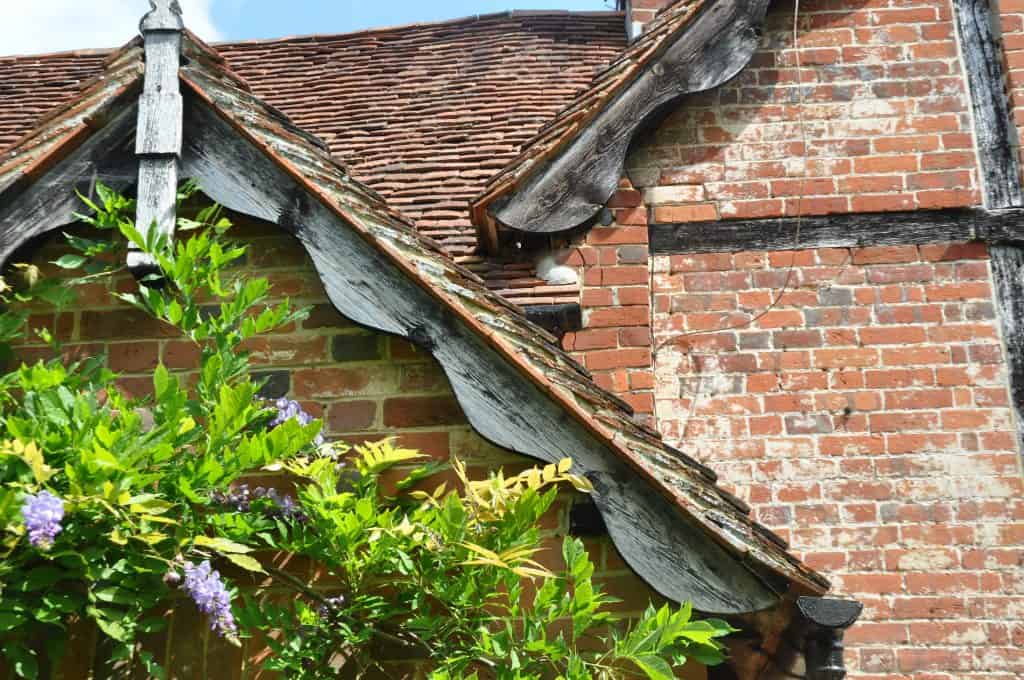
Historic roofs require specialist skills and a different approach to the works. Repairs that use appropriate materials should be prioritised over replacement. Ask to see examples of work to similar listed buildings they have worked on, and if possible, talk to the owners of such properties about their experience with the contractor
Are you comfortable with not receiving a guarantee for roof repairs to a listed building?
A guarantee for roof repair works is not usually provided – this is mostly offered only for a new roof, or an entire ‘re-roof’.
Why does this matter? With listed buildings the conservation approach supported by Historic England and the Society for the Protection of Ancient Buildings (SPAB), amongst others, is to retain historic fabric where possible. This means the ‘re-roofing’ of listed buildings is less common than you might imagine. The role of sensitive repairs is very important role in the maintenance of the condition of a roof; regular maintenance can mean a ‘re-roof’ ccould be avoided in the long term.
Do I need listed building consent for roof repairs to a listed building?
If a re-roof is a consideration, it should be assumed listed building consent would be required, unless the local authority advise otherwise. Extensive repairs can also require listed building consent, and a discussion with the Conservation Officer or a Conservation Architect is recommended prior to works being carried out. A roofing contractor familiar with working on listed buildings should understand that if they carried out work on a listed building that doesn’t have consent they can be prosecuted. Because of this they should be asking you, “Do you have listed building consent for these works?”. Equally, once they have reviewed the condition of the roof they may suggest, “…you may require listed building consent for these works.” Should ‘scope creep’ occur without these questions being raised by the contractor this can be a ‘red flag’ as to relevant experience.
This article offers a short summary of the implications of ‘unauthorised works’ to a listed building:
Unauthorised Works on a Listed Building What are the Penalties – The Barristers Inc
Do I know what to look for in a quote for roof repairs to my listed property?
The quote my client shared with me was a series of ticks in boxes with a very costly estimate attached on one side of A4. When works are carried out on a listed property – and it has been established whether or not listed building consent is required – I recommend the proposed works are written out in detail to set out exactly what is proposed, the sequence of the works, and the specification of the materials proposed. This will help both you and the contractor to understand the complete process from start to finish, and enable a third party who could also be consulted to go through the works and identify where more information may be required.
Do I need a description of the proposed roof repairs to my listed property in the quote?
The description in a quote should include the specific materials and amount proposed to be used. Listed buildings often require a bespoke approach to repairs and it is highly unlikely generic ‘sand/cement mortar’ or ‘concrete tiles’ will be appropriate.
Can AI help to understand construction industry jargon?
Recent experience on another project showed me how unhelpful AI can be if used without professional oversight. It was an interesting exercise: the client openly advised they would put a method statement together as requested by the Conservation Officer using AI. The AI output was surprisingly unconvincing owing largely to the misuse of terminology and its lack of understanding of the specific situation on-site. It took two reviews of the text to shape it into a presentable proposal; what can be said is that it provided a starting point.
This made me realise just how ‘jargon-y’ the construction industry can be – and I wryly noted that whilst the AI output described something that could be readily understood, as an ‘informed’ reader it felt like an attempt to be hoodwinked!
Do not be intimidated by jargon and abbreviations: always ask the person supplying the quote to explain everything even if it may seem ‘obvious’. Do consider requesting a second opinion from a heritage consultant or Conservation Architect as early as possible.
How long do roof repairs to a listed building take?
Sometimes roof works can feel urgent – maybe a leak has appeared – and roofs are often hard-to-reach places with no safe access. From experience, roof works to listed buildings that require approval can take between 6 and 12 months from the point of appointing a consultant to receiving a decision from the local authority: planning ahead for this will reduce a situation of feeling pressured into doing ‘urgent’ works. Regular maintenance is vital for all older buildings – to read more on this click here
A drone survey by a RICS conditions’ surveyor with a specialism in heritage properties is one way to obtain a more complete picture of the condition of your roof without the need to provide safe access. If listed building consent is required the process to reach a decision can take three to four months; to find an appropriately skilled contractor available for when said approved works could be carried out can take another three to four months. Overall, planning ahead for roof repairs to a listed building will help build in the time needed, and mitigate the risk of ‘doorstep pressure’.
Final thoughts
Historic buildings reward careful stewardship. If the right questions are asked before works begin it can help avoid unnecessary costs, protect historic fabric and ensure roof repairs are carried out so that a building’s heritage significance is respected. It is also about having the right people around you. Independent professional advice at an early stage is often one of the best investments a listed building owner can make.